https://s3.amazonaws.com/heide-contracting/atlanta-ga/how-much-does-a-retaining-wall-cost.html
<!DOCTYPE html>
Atlanta, GA’s Most Trusted Retaining Wall Contractors: Strength, Style, and Peace of Mind for Homeowners
Atlanta, GA’s Most Trusted Retaining Wall Contractors: Strength, Style, and Peace of Mind for Homeowners
Atlanta sits on rolling Piedmont terrain with dense red clay. That soil holds water and pushes hard on anything that stands in its way. Homeowners see it in washed-out beds, leaning timber walls, and wet basements after a North Georgia storm. A retaining wall in this city is more than a garden feature. It is a structural system that must handle hydrostatic pressure, manage drainage runoff, and protect foundations through years of heavy rain and heat.
Heide Contracting serves as a structural masonry and retaining wall contractor across Atlanta, GA. The team builds permanent slope stabilization with clean architectural finishes. Every wall blends engineering control with high-end hardscaping. The company serves Buckhead, Brookhaven, Sandy Springs, Decatur, and nearby areas like Vinings, Dunwoody, Roswell, and Marietta. For homeowners who search for retaining wall contractors Atlanta GA, this article explains the firm’s process, local soil behavior, and what separates a long-lived wall from a short-term patch.
Why Atlanta’s Red Clay Demands Structural Thinking
Red clay looks stable when dry. It swells when wet. That shift drives lateral pressure into any wall or foundation. On a steep backyard in Buckhead or Druid Hills, rainfall sheets off the slope, picks up silt, and clogs drains. Water then builds pressure behind the wall face. Without venting, the pressure pushes, the wall bows, and the yard sinks near the top of the slope. Many older timber walls in 30327 and 30305 failed for this reason. The ties rotted and the deadmen let go. The soil never stopped moving, so the wall had no chance.
A structural retaining wall must plan for water first. The soil in Atlanta does not drain like sand. It needs a controlled path for water to leave. It also needs reinforcement to transfer load deep into the backfill. That is why a modern Segmental Retaining Wall, or a reinforced masonry wall with proper footings, outlasts timber by decades when built right.
Warning Signs That Call for a Qualified Contractor
Several site symptoms show up before a failure. These patterns repeat across Morningside, Virginia-Highland, and Garden Hills after summer storms and winter fronts. Early action reduces cost and protects landscaping, patios, and driveways near the slope crest.
- Wall bowing or leaning that grows after each rain event.
- Soil erosion, washouts, or exposed roots below decks and patios.
- Pooling against the foundation or a sinking yard near the house line.
- Cracked mortar joints, displaced caps, or bulged block faces.
- Failed timber walls with rotted deadman anchors or pulled spikes.
Any of these signs mean the site is moving or holding water under pressure. A structural assessment maps how the soil drains, where the surcharge loads sit, and what reinforcement is needed. On tight sites near Piedmont Park or along the BeltLine, safe access and staged work keep neighbors and sidewalks protected.
Engineering the Retaining Wall: What Matters Behind the Face
The visible surface, whether Natural Fieldstone or modular block, is only part of the wall. The hidden system carries the load. Heide Contracting designs walls as structural assemblies. The team checks bearing capacity, calculates lateral earth pressure, and sets drainage to break hydrostatic build-up.
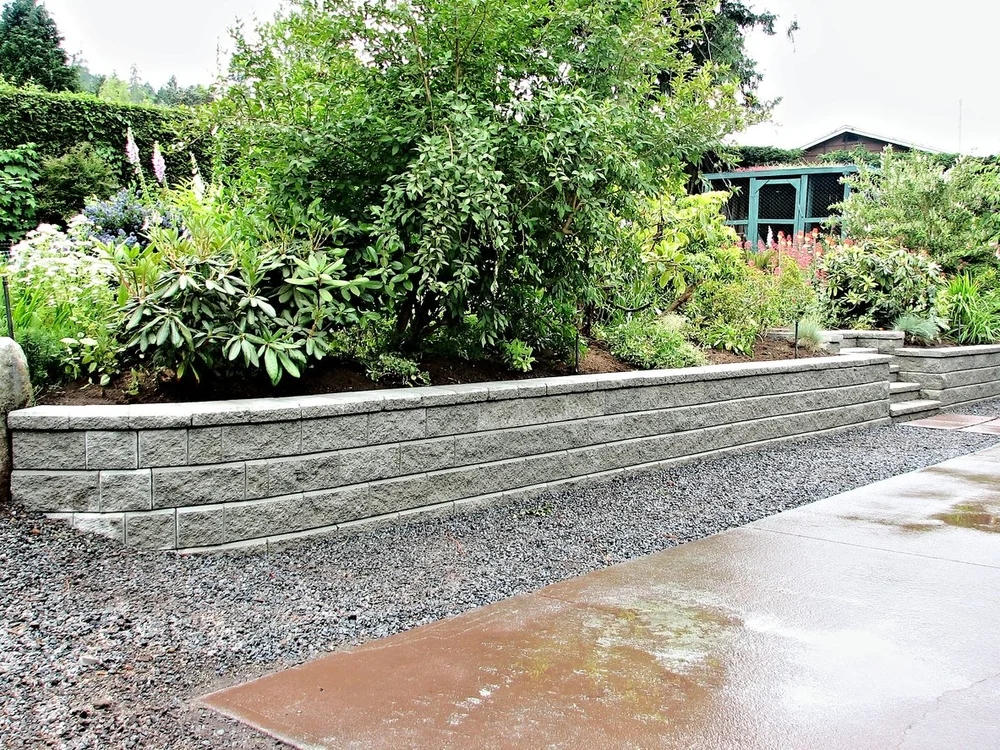
Segmental Retaining Walls use interlocking concrete units with Geogrid reinforcement. The geogrid extends back into compacted gravel and soil. That creates a stable mass that resists sliding and overturning. Depth, spacing, and length of the geogrid depend on wall height, surcharge loads, and soil type. For higher walls near driveways, pools, or sloped streets in 30319 and 30342, the design may include longer grid layers and a wider base.
Gravity block systems like Redi-Rock serve large loads and commercial sites. Their mass alone resists pressure, yet proper drainage is still vital. Masonry or poured concrete walls need rebar, footings at proper depth, and weep holes that stay open. All systems share a core rule in Atlanta’s red clay. Water must leave fast, every time.
Drainage Solutions That Neutralize Hydrostatic Pressure
Pressure follows trapped moisture. The remedy begins at the base. A perforated pipe runs level or with a slight fall along the wall’s heel. Washed gravel surrounds the pipe inside a wrapped trench. Filter fabric separates the clean stone from native clay. This filter prevents silt from clogging the bedding. High-capacity weep holes vent water through the face for masonry walls. For SRWs, the gravel chimney and drainpipe carry water to daylight or a tie-in storm line where allowed by code.
On slopes above Chastain Park Amphitheatre or Bobby Jones Golf Course, heavy downpours can overwhelm yard drains. A French drain up-slope of the wall can intercept sheet flow before it reaches the backfill. On some sites, a swale diverts water along the property line to a safe discharge point. Each choice depends on grade, lot boundaries, and tree roots. The goal is simple. Keep water out of the backfill or give it a fast path out.
Footings, Backfill, and Compaction
Footings matter more than face texture. A stable base course sits on compacted crushed stone over undisturbed subgrade. Frost is minor in metro Atlanta, yet footings should sit below topsoil and organics. For masonry or poured walls, a reinforced footing sized for load prevents settlement. Rebar ties the stem to the footing and resists bending from lateral loads.
Backfill must drain and compact. Washed gravel sits directly behind the face units. The gravel zone allows water movement and reduces pressure. Clean lifts and uniform compaction with a plate compactor and a vibratory roller build a consistent mass. Clay backfill without drainage stone or fabric is a frequent failure cause. It traps water and adds weight. The right materials make the pressure predictable and manageable.
Anchors and Reinforcement for Special Cases
Some walls need more than geogrid. Deadman anchors or soil nails can tie the wall to stable ground in short access lanes or narrow setbacks. For high surcharge loads near a driveway or a parking area at a Buckhead renovation, the design may switch to a reinforced concrete stem with rebar cages and tiebacks. Heide Contracting reviews each site condition with structural engineering oversight. The right choice reduces risk and protects adjacent structures.
Materials and Brand Options That Fit Atlanta Homes
Architecture varies across Atlanta. Historic homes in Virginia-Highland and Druid Hills pair well with Natural Fieldstone, Granite Rubble, or Bluestone caps. Modern builds in Brookhaven and Sandy Springs may favor the clean modular lines of Belgard, Allan Block, or Keystone Retaining Wall Systems. Pavestone offers reliable textures for residential slopes and garden terraces. For heavy loads and tall heights, Redi-Rock and Rosetta Hardscapes deliver mass and a refined face.
Heide Contracting serves as a certified installer for Belgard and Keystone systems. The company builds commercial-grade solutions where needed and follows GADOT-compliant practices on public or high-load projects. Each brand has face textures, color blends, and cap profiles. The team matches the wall to the house, the neighborhood, and the slope geometry. A yard near the Swan House in Buckhead reads differently than a mid-century lot near Georgia Tech. The finish should feel native to the street, yet the core must stay structural.
Local Case Notes: What Works in Specific Neighborhoods
Buckhead and Chastain Park hold steep ravines with long fall lines. A two-tier SRW with geogrid often beats a single tall wall. The stepped design breaks the load into manageable segments. It also gives space for plantings and safer guard rails near pool decks.
Virginia-Highland, Morningside, and Inman Park sit on older lots with tight alleys and mature trees. Access limits machine size. A Mini Excavator and a skid steer with narrow buckets help in these yards. Handwork increases, and staging runs along the driveway. Drainage ties may need core drilling through old brick or stone garden walls. Historic aesthetics push fieldstone or brick-faced masonry. Structural details hide behind the face but carry the same load as a modern modular system.
Brookhaven, Decatur, and Garden Hills blend new builds and older cottages. Many clients ask for a hybrid. SRW cores with Natural Fieldstone veneers can deliver a classic look with modern performance. The design holds unit tolerances for caps while the face reads as dry-stack stone. This option suits 30319 and 30305 where curb appeal drives value.
Along the BeltLine and near Piedmont Park, permitting and access control drive schedule. Sidewalk closures, fence protection, and material drop zones must match city rules. Erosion control measures stay in from day one. Silt fence, inlet protection, and stabilized entrances keep muddy runoff out of public space.
Equipment That Delivers Quality in Tight Atlanta Sites
Tools signal the standard of work. Heide Contracting uses a Mini Excavator for precision trenching and footing prep behind garages and decks. A skid steer handles bulk movement and staging on wider lots. A plate compactor and a vibratory roller set uniform density in lifts. A laser level or transit level confirms elevations for base course and drain slopes. Tighter tolerances at the base cut rework and keep the face true up the stack.
Construction Sequence That Prevents Rework
Site protection and layout come first. The crew marks utilities, sets erosion control, and defines spoil and stone stockpiles. Excavation follows the plan line and grade. The base stone compacts in thin lifts. The first course locks into the bedding and checks level in both directions. Drainage pipe sits on clean stone with proper outlets. Filter fabric wraps the stone to block silt. Each course stacks with clean interlock, and geogrid layers lay flat at the called elevations with full embedment. Backfill compacts in even lifts behind the face. Caps set with adhesive or mortar where the design calls for it. Final grading pushes water away from the wall top. The last step is a water test. The team hoses the slope to confirm outflow at weeps or daylight points.
Permitting, Codes, and When an Engineer Must Stamp Plans
Retaining wall rules in Atlanta vary by height, location, and loads. Many walls over a set height need permits and an engineer’s seal. Walls near property lines, public walks, or shared drives need extra review. Projects close to Piedmont Park, the BeltLine, and city landmarks often come with strict site controls. Heide Contracting handles submittals, drawings, and coordination with inspectors. Structural engineering oversight keeps design and construction aligned with code and duty of care. Homeowners gain a record that supports resale value and insurance needs.
Cost Drivers and Practical Budget Ranges
Price anchors to risk, access, and height. Short garden walls with light duty cost less per foot than high walls with surcharge loads. Tight access raises labor. Stone veneers add hours. Drainage tie-ins and storm approvals add fees. In Atlanta, small SRW terraces can start in the lower five figures. Large structural walls with engineering, heavy drainage work, and high-end stone often sit in the mid to upper five figures and above. The assessment phase sets a clear scope so surprises do not appear mid-build. A transparent bill of materials lists brand units, geogrid specifications, pipe size, gravel tonnage, and cap style.
Maintenance: Keep Drain Paths Clear and Grades Honest
A well-built wall needs little care. Still, a quick annual check helps. Clear leaves from weep holes. Keep mulch levels below caps. Regrade low spots that start to hold water near the wall top. Root systems can push into joints over time. Trim plantings and monitor new tree growth near the backfill zone. After extreme storms, look for fine silt stains at joints. That can hint at a clog forming upstream. Early attention keeps performance steady for decades.
Residential and Commercial Applications
Homes in 30327 and 30342 often need walls to hold drive courts, pool decks, and outdoor kitchens. The loads vary and the finishes matter. Commercial properties near Georgia Tech or along Peachtree may need Redi-Rock or reinforced concrete with guardrails, bollards, and fencing. Parking lots near Bobby Jones Golf Course often need long runs with ADA transitions and handrails. Heide Contracting handles both categories. Residential and commercial grade work share the same structural logic. Drainage comes first, then reinforcement, then face.
Comparing Wall Types by Performance in Atlanta Clay
Segmental Retaining Walls lead for most residential projects. They adapt to curves, resist freeze-thaw cycles, and pair well with geogrid. Masonry or poured concrete suits tight setbacks where a thinner stem helps. Gravity blocks like Redi-Rock handle tall heights, heavy live loads, and fast schedules. Timber fails early in this climate. Rotted ties and pulled spikes appear within years on wet slopes. For steep lots in Vinings or Ansley Park, a tiered SRW with clean drainage and correct grid length offers a stable and attractive solution that fits the streetscape.
Why Many Timber Walls Fail in 5 to 10 Years
Timber decays. Fasteners loosen. The backfill traps water behind boards and ties. Without a proper French drain and gravel chimney, the soil saturates and swells. Deadman anchors rot first. Then the face leans. A replacement with SRW and geogrid, plus a wrapped perforated pipe, filter fabric, and weep points where needed, prevents a repeat failure. The upfront spend returns value through stability, curb appeal, and fewer service calls over time.
Serving Zip Codes and Landmarks That Signal Local Knowledge
Heide Contracting serves homeowners and builders across Atlanta, including 30327, 30305, 30306, 30319, and 30342. The team has active work near Piedmont Park, the Swan House, Chastain Park Amphitheatre, and the BeltLine. Projects range from terrace rebuilds in Garden Hills to slope stabilization on ridges in Vinings. The company also works across Sandy Springs, Brookhaven, Decatur, Dunwoody, Roswell, and Marietta. Each site gets a plan that reflects local grades, soils, drainage paths, and adjacent structures.
Quality Controls That Keep Walls Straight for Decades
Quality starts with layout and holds through compaction. The crew checks base level with a laser level and transit benchmarks. The first course sets the truth for the face. Each lift of backfill meets a compaction target before the next course goes in. Geogrid stays flat and clean. Overlaps follow the manufacturer’s guide. Face units align, and joints stagger to avoid vertical seams. Weep points clear with backflush during final washdown. These steps sound basic. In practice, they demand attention on busy sites near schools, parks, and narrow lanes. Shortcuts here cause callbacks later. The company’s method locks in the geometry and drains the pressure off the wall every storm.
Brand and Material Choices by Use Case
Belgard and Keystone Retaining Wall Systems serve most residential SRWs with a wide face catalog. Allan Block and Pavestone offer reliable units for curves and steps. Redi-Rock and Rosetta Hardscapes handle tall or loaded sites with fast set rates and strong shear keys. Natural Fieldstone, Granite Rubble, and Bluestone caps give historic districts a fit finish. The wall system selection follows a structural path first. Aesthetic selection follows after loads, setbacks, and drainage routes define the options. This sequence protects budgets and keeps projects aligned with permit reviews.
What Homeowners Can Expect During a Structural Site Assessment
The assessment begins with a walk of the slope, the crest, and any adjacent structures. The team maps visible flow paths and checks for soil erosion scars. A transit level records key elevations near the house, the wall line, and discharge points. The crew notes utilities, tree roots, and access limits. If the wall height or load calls for it, a structural engineer reviews soils data and sets design parameters. The client receives a plan that lists wall type, geogrid reinforcement lengths, drainpipe sizes, gravel backfill volumes, filter fabric specs, footing details, and cap profiles. The proposal also shows brand options and lead times.
Why Heide Contracting Leads as Retaining Wall Contractors in Atlanta, GA
Local soils set a high bar. The company’s method meets it. The work shows up in Buckhead terraces that stay straight, Decatur yards that drain after downpours, and Brookhaven drive courts that hold line under vehicle load. The crew understands the Piedmont topography and the behavior of red clay. They bring structural engineering oversight to residential and commercial grade projects. They are bonded and insured and work as a Licensed General Contractor in Georgia. They build custom masonry, tiered SRWs, and heavy Redi-Rock systems that stand up to North Georgia weather.
- Licensed General Contractor with structural engineering oversight.
- Certified installers for Belgard and Keystone systems.
- GADOT-compliant practices for high-load and public-adjacent projects.
- Bonded and insured, residential and commercial grade service.
- Proven performance across 30327, 30305, 30306, 30319, and 30342.
Concise Answers to Common Technical Questions
How high can a wall go without engineering? Atlanta rules vary by zone and proximity to property lines. Many walls over a modest height require a permit and sealed drawings. Contact the team for a quick review of your address and zoning.
What drainage is standard behind the wall? A perforated pipe at the base with washed gravel backfill and filter fabric is standard. Weep holes or gravel chimneys vent water. Some sites need added French drains or swales up-slope.
Which wall type lasts longest in red clay? A reinforced SRW or a reinforced concrete wall with proper drainage can serve for decades. Timber does not stand up to Atlanta rain and heat cycles and tends to fail early.
What about equipment on tight lots? A Mini Excavator and compact skid steer handle narrow alleys and side yards. The team stages materials to protect driveways and landscaping.
Can the wall match a historic look? Yes. Natural Fieldstone, Granite Rubble, and Bluestone caps match homes in Ansley Park, Druid Hills, and Virginia-Highland. SRW cores can support a stone veneer where structure and appearance both matter.
Service Area Snapshot With Local Confidence
Heide Contracting serves as a go-to choice for retaining wall contractors Atlanta GA. The portfolio covers Buckhead, Chastain Park, Ansley Park, Garden Hills, Virginia-Highland, Morningside, Inman Park, Druid Hills, Brookhaven, Sandy Springs, Decatur, Vinings, Dunwoody, Roswell, and Marietta. The team understands the permitting climate, the red clay behavior, and the way North Georgia rainfall loads a slope. Landmarks near active and past work include Piedmont Park, the BeltLine, Bobby Jones Golf Course, the Swan House, and Georgia Tech. That local record matters. It shows how design choices hold up across seasons and neighborhoods.
Ready for a Structural Assessment?
A stable wall protects a home and lifts curb appeal on any block in Atlanta. Heide Contracting brings structural engineering, high-end masonry, and precise drainage control to each site. The team builds SRWs with geogrid reinforcement, sets French drains to cut hydrostatic pressure, and finishes walls with brands that match the style of the home. For failing timber, bowing faces, and wet foundations, prompt action limits damage and lowers cost.
Clear next steps:
Request a Structural Site Assessment. Receive an engineered plan with wall type, drainage layout, geogrid specs, and brand options. Confirm schedule and permitting. Watch the wall go in with clean lines and a dry backfill. Homeowners in 30327, 30305, 30306, 30319, and 30342 can reach out today for a visit near Buckhead, Brookhaven, Decatur, and nearby neighborhoods.
Heide Contracting builds permanent slope stabilization for Atlanta’s toughest grades. Call or message to schedule. Photos, permits, and references are available on request.
Heide Contracting provides construction and renovation services focused on structure, space, and durability. The company handles full-home renovations, wall removal projects, and basement or crawlspace conversions that expand living areas safely. Structural work includes foundation wall repair, masonry restoration, and porch or deck reinforcement. Each project balances design and engineering to create stronger, more functional spaces. Heide Contracting delivers dependable work backed by detailed planning and clear communication from start to finish.
Heide Contracting
Phone: (470) 469-5627
Website: https://www.heidecontracting.com, Google Site
Social Media: Instagram, Facebook, LinkedIn
Map: View on Google Maps